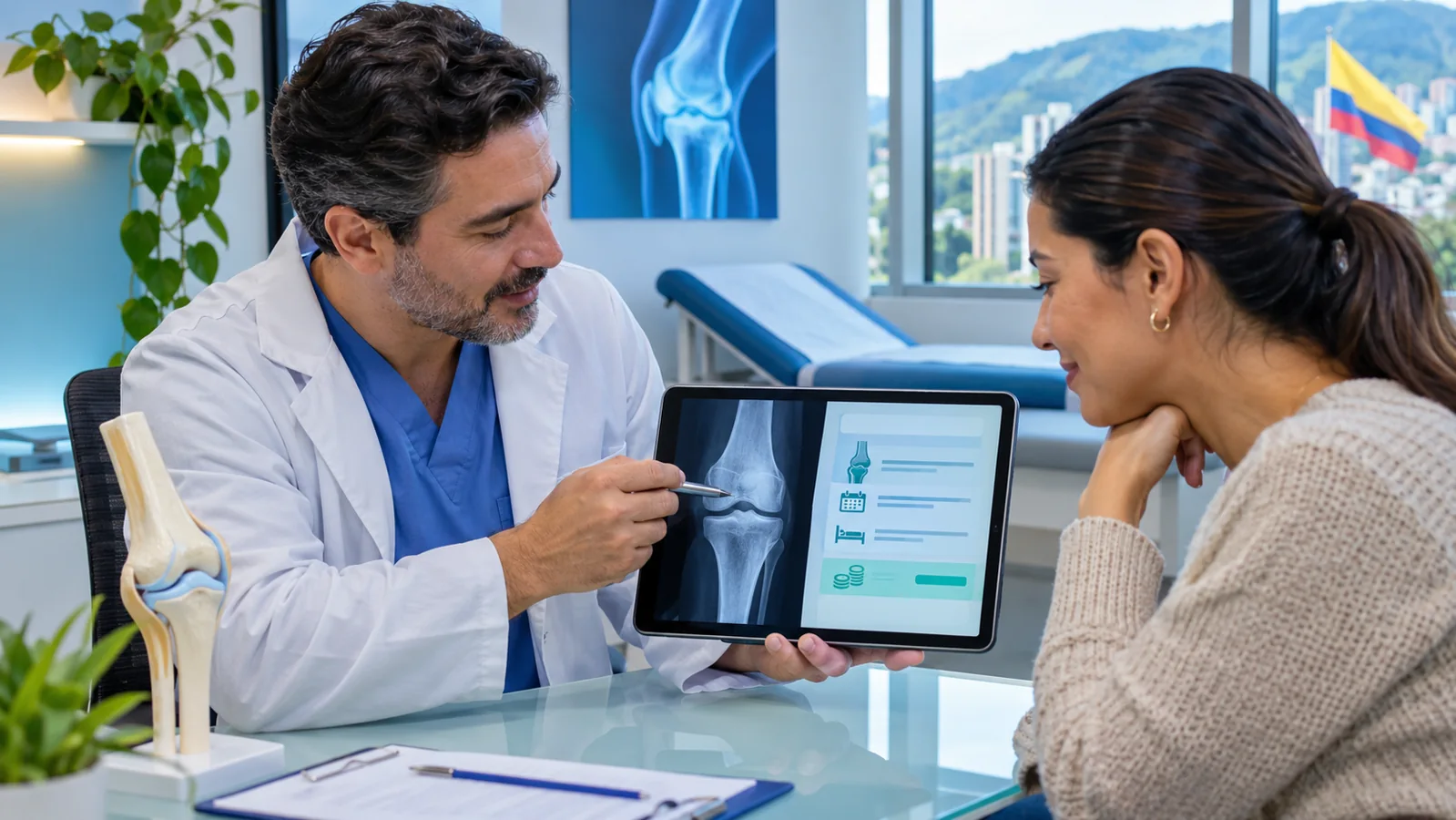
A second opinion can answer a much more important question than “Can another surgeon do this for less?” It can help you understand what is wrong with your knee, what treatment choices remain, and what would have to be true for surgery to make sense. When the second opinion comes from an orthopedic specialist in another city or country, the quality of the records you send often determines whether the first conversation is useful.
You do not need to diagnose yourself, purchase new imaging on your own, or assemble a perfect medical archive. You do need a clear summary of the problem, access to the records already obtained, and a safe way to share them. This guide explains what usually helps, what may be requested later, and how to avoid treating a preliminary opinion as surgical clearance.
First, define the question you want answered
“Please review my knee” is a starting point, not a clinical question. Tell the specialist what your original physician has recommended and what you still want to understand. Are you uncertain whether replacement is needed now? Are you comparing partial and total replacement? Do you have continuing pain after an earlier operation? Are you considering an ACL procedure? These situations require different clinical information.
Write three sentences before gathering files: what you experience, what treatment you have tried, and the decision you need help making. For example: “I have persistent knee pain that limits stairs and walking. I have tried treatments recommended locally, and my surgeon has discussed replacement. I want to know whether the diagnosis and proposed operation are appropriate, and what further examination is needed.” The point is clarity, not persuasion.
A surgeon providing an independent review may agree with the first recommendation, disagree, suggest more conservative care, or ask to examine you in person before commenting. A useful second opinion is not automatically the one that recommends an operation.
The seven record groups worth organizing
| Record group | What to look for | Why it helps |
|---|---|---|
| Current assessment | Orthopedic consultation or referral letter | Shows the working diagnosis and recommendation |
| Imaging | Existing X-rays, MRI or CT images when available, plus radiology reports | Lets the specialist evaluate anatomy and clinical questions in context |
| Treatments to date | Physical therapy, injections, medications, bracing and response | Shows what has and has not helped |
| Prior operations | Operative reports, discharge summaries, implant records if relevant | Essential context for revision or complex cases |
| General health | Current conditions, medication list, allergies, major previous procedures | Helps identify issues needing assessment before treatment |
| Function and goals | Walking, stairs, work, sport, mobility and expectations | Explains what improvement matters to you |
| Timeline and contact | Approximate onset, progression, availability, preferred language | Helps the team plan the consultation |
Not every patient needs every document. A person asking about first-time knee replacement may have no operative records. A patient with a complicated revision history may need far more than a one-page summary. Let the specialist decide whether additional tests are clinically indicated.
Send actual imaging when you have it, not just a screenshot
A written radiology report is useful, but it may not give a consulting surgeon everything needed to interpret the images for a proposed operation. Ask the imaging center how to obtain the original study and its report. Many centers can provide a secure download, portal access, or DICOM files; a CD or USB may still be available in some settings. Different specialists and clinics have different intake systems, so ask what formats they accept before uploading anything.
Avoid photographing an X-ray on a computer screen and assuming it replaces the underlying study. A phone photo can be distorted or omit clinically relevant views. Equally, do not order a new MRI, CT, or X-ray just because a website checklist mentions it. The specialist may prefer a particular view or may already have enough information. This is a medical decision.
Check that filenames and study dates distinguish right from left knee. If both knees are involved, specify which is the main concern. A radiology report and imaging study from different dates should be labeled separately. Do not edit the image content or remove annotations that identify the clinical study.
Prior surgery changes what the clinician needs
Someone who has never undergone knee surgery can often begin with a diagnosis, current records and imaging. For revision knee replacement, prior ligament reconstruction or persistent symptoms after an operation, documentation becomes more important. The original operative report may describe the procedure, implant components or graft, and findings that are difficult to reconstruct later. Rehabilitation and complication records may also matter.
If you were treated at multiple hospitals, make a simple chronology: procedure, date, facility, reason, recovery course and any unresolved concern. Include implant identification documentation if it exists. Be candid about infection evaluations or prior complications, even when you do not know what they mean. A specialist can then identify which records are essential for the next step.
An overseas provider should not imply that a complex revision has a final quote or definite surgery date before appropriate review. The same caution applies to a person whose first diagnosis is uncertain.
Describe symptoms without playing doctor
A symptom summary can be useful even though it is not an examination. Explain where symptoms are felt, when they began, what aggravates them, how they affect daily life, and any changes over time. A short functional diary may be more useful than pages of adjectives. Can you walk to the shop? Climb stairs? Sleep comfortably? Work your normal shift? These details help the specialist understand the impact of the problem.
Do not use a pain score as a substitute for the whole story. Do not minimize a new symptom because you want to be accepted as a surgical candidate. New, severe, rapidly worsening or concerning symptoms need timely assessment by a local clinician or emergency service rather than an international price comparison.
For people comparing arthritis treatments, be ready to discuss what has already been attempted and which options were tolerable. For ACL concerns, describe the original injury, instability symptoms and relevant sports or activities. Your goal is to present your actual situation, not to match a clinic’s marketing category.
Prepare a medication and health summary
List the name of each medicine and supplement you currently use, including products taken only occasionally, and note known allergies or previous reactions. Mention important medical conditions and surgeries. Do not change medicines or stop a prescription to make a planned consultation easier. A qualified clinician will determine what matters for assessment and perioperative planning.
Some patients are uncomfortable sharing sensitive health details through a general website form. That is reasonable. Use an initial inquiry to ask how the clinic securely receives records, who has access, and whether records will be transferred to another provider. Keep the first message limited to what is necessary to arrange the review. Never send passports, insurance identifiers, or full medical histories to an unverified chat contact simply because they promise a fast quote.
The CDC’s medical-tourism guidance encourages patients to carry complete records and share details of overseas care with later treating clinicians. That principle works in both directions: keep copies of the information you provide for a second opinion and request copies of the review you receive.
Understand what a remote second opinion can and cannot decide
An orthopedic specialist may be able to review a history and existing imaging remotely, discuss likely options, identify missing information, or recommend an in-person assessment. Remote review cannot necessarily establish a final diagnosis, confirm operative fitness, or replace a physical examination. The degree of certainty depends on the case, available records, the clinician’s judgment and the applicable telemedicine rules.
Ask whether the consultation is educational or establishes a treatment relationship, whether it is conducted by a named licensed specialist, what the fee covers, and whether the doctor will provide written findings. If the clinician requests new imaging or tests, clarify who orders them, how the results are reviewed, and whether another appointment is needed.
The answer may be “not enough information yet.” Treat that as a potentially appropriate clinical conclusion, not a failed consultation.
Use a short, secure submission checklist
Before sending records, confirm that the receiving practice is the intended one and that its specialist and facility can be independently verified. Then:
- Put the main question in the first paragraph of your inquiry.
- Make a list of documents you already have, including dates.
- Ask which imaging format and secure transfer method the clinic accepts.
- Confirm the language used in the consultation and written report.
- Ask whether the initial review is free, paid, or credited to later services.
- Obtain a copy of any privacy notice, consent or referral terms that apply.
- Keep a personal copy of everything you send and receive.
Do not share unnecessary personal identifiers when requesting basic logistics. If you are using an intermediary to compare clinics, ask exactly which providers will receive the records and whether you can choose not to share them more broadly.
Questions to ask during the second-opinion appointment
Move beyond “Would you operate?” Ask what diagnosis best explains the symptoms and which findings support it. Ask about alternatives, their tradeoffs, and what could happen if you postpone treatment. If surgery is considered, ask which procedure the surgeon proposes, how the choice relates to your imaging and health, and which questions remain unresolved.
For knee replacement, ask about the likely recovery and rehabilitation obligations, not only the procedure itself. For other knee operations, ask about the expectations and limitations specific to the proposed treatment. Request a written plan covering the next step: examination, further tests, trial of nonoperative treatment, or surgery assessment. A careful specialist should be able to explain uncertainty without selling certainty.
If you are comparing international centers, add questions about aftercare in your home country, how records will transfer, how complications are handled, and whether your local treating clinician can review the recommendation. A second opinion should improve continuity, not fracture it.
From medical opinion to financial estimate
Only after the clinical scope is sufficiently clear should you ask clinics to compare costs for the same plan. A preliminary medical assessment may still lead to a conditional price, especially when the surgeon has not examined you. Ask whether fees include the hospital, anesthesiology, implant or graft, tests, follow-up and rehabilitation, and exactly which items can change following assessment.
It is misleading to compare the price of a partial replacement at one hospital with a total replacement at another as though they were versions of the same purchase. Likewise, a primary operation and a revision are fundamentally different clinical situations. Use the second opinion to establish the questions; use written estimates to compare their economic consequences.
A message you can adapt
Hello. I am seeking an orthopedic second opinion about my knee. My current diagnosis or recommendation is [short description]. I have [existing imaging and reports] dated [month/year], plus a list of treatments tried. I would like to understand my options, what can be evaluated remotely, the specialist who would review my case, and how to submit records securely. Please let me know any consultation fee and whether a written assessment is provided.
You can send that request before collecting every file. A responsive clinic will explain its process rather than demanding a huge upload through an unknown channel.
Frequently asked questions
Do I need a new MRI before a second opinion?
Not necessarily. Send a summary of what you have and ask the qualified specialist which imaging, if any, is needed. Additional testing depends on the clinical question.
Can a second opinion guarantee that I need surgery?
No. It may identify reasons to reconsider the plan, request more assessment, or explore alternatives. Clinical decisions require appropriate evaluation and consent.
Should I share records with multiple providers at once?
Only with providers you have chosen, using appropriate secure processes. Know who receives the data and what will happen to it.
Can a second opinion be used for a price comparison?
Yes, once the clinical scope is clear enough to obtain comparable preliminary estimates. Do not mistake a price quote for clearance to proceed.
Next step: organize the questions, not just the documents
KneeQuote can help you prepare a knee-treatment inquiry and request information about provider consultations. Start with the existing recommendation, the records you have, your country of residence and your main uncertainty. Ask for the secure record-submission process before sharing sensitive documents. The specialist—not a lead form—determines whether any procedure is appropriate.
Editorial sources
General educational information only. The treating clinical team must determine suitability, risks and follow-up. No treatment outcome is guaranteed.