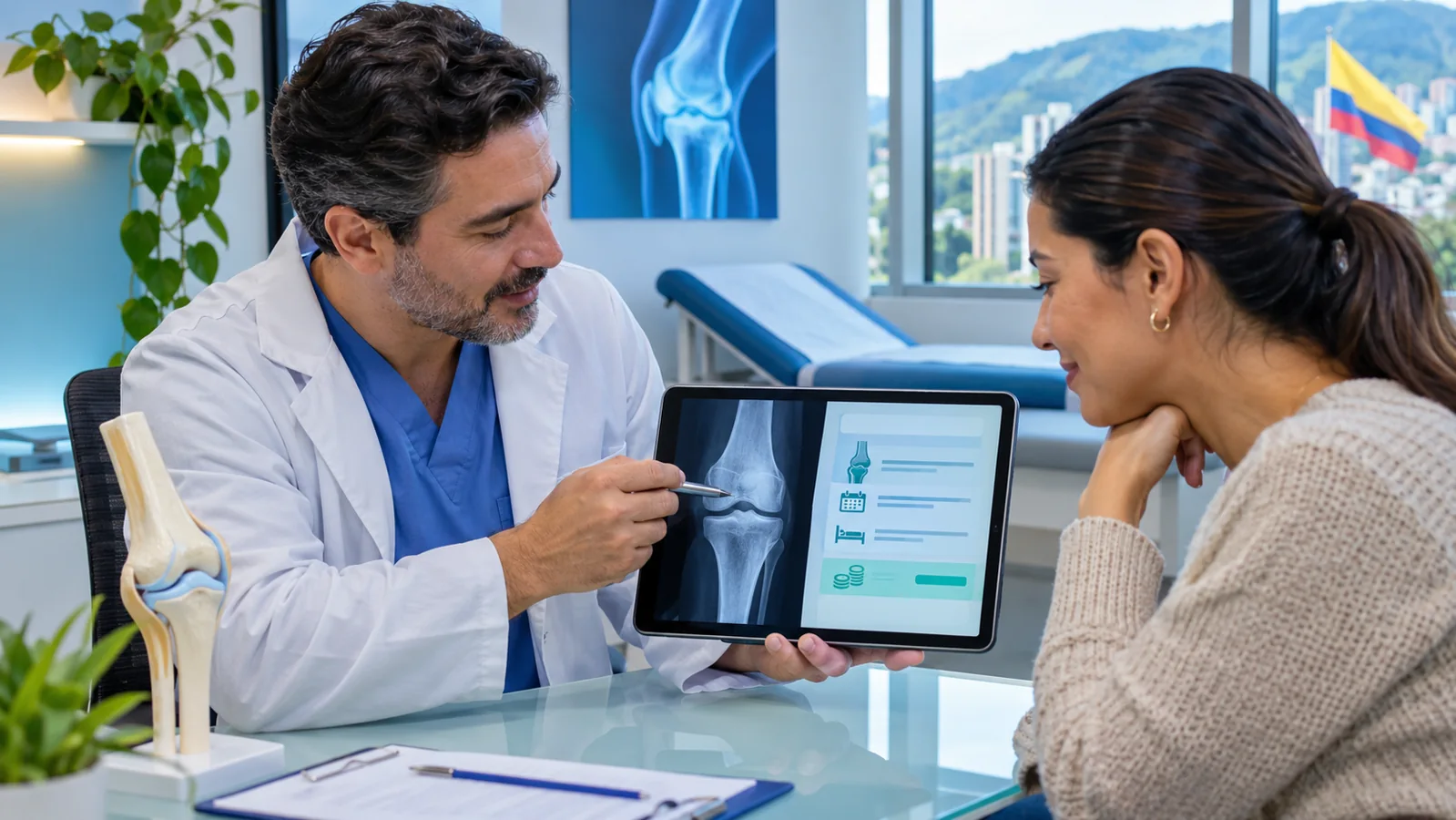
The quote for a knee operation overseas may describe a hospital stay, implant, surgeon and perhaps a few days of rehabilitation. What happens after the flight home is often less clear. Physical therapy is not an optional line item to discover once the plane lands. For many patients it is a central part of recovering movement, strength, confidence and day-to-day function. A lower surgical price can become an expensive and disruptive choice when the patient has no local therapist, no written program and no agreed route back to the operating surgeon if recovery changes course.
This guide focuses on the handoff, not on prescribing an exercise routine. Your surgeon and physical therapist must tailor activity to your procedure, health and progress. The purpose here is to help you obtain a workable postoperative plan before putting money down on an international treatment package.
Why “physical therapy included” is not a complete answer
When clinics advertise rehabilitation, ask what that phrase means in calendar days, clinical services and locations. It might describe walking practice in the hospital, one instruction session, home exercises, outpatient visits during your destination stay or a longer structured program. These arrangements are not interchangeable. The American Academy of Orthopaedic Surgeons identifies exercise, progressive walking and restoration of movement as important parts of recovery after knee replacement, but an individual plan depends on the patient’s surgery and discharge assessment.
Ask for the named discipline delivering the rehabilitation, how many sessions are included, whether one-on-one assessment is provided and how the exercise plan will be documented. Does the fee cover a therapist working with the surgeon’s team? Are mobility aids included, rented or purchased? Is a printed or digital program given to the patient? And who assesses readiness for discharge rather than merely completing a booked number of days?
A package that covers only the first few days may still be reasonable. The issue is to know precisely where the included care ends and your own arrangements begin.
Organize local rehabilitation before leaving home
Start with an appointment or preliminary conversation with a licensed physical therapist near your home, ideally a practice familiar with postoperative knee care. Explain the type of procedure being considered—total knee replacement, revision replacement, ACL reconstruction or another operation—because rehabilitation restrictions can differ substantially. Ask whether the practice accepts postoperative referrals from an overseas surgeon and which medical records it requires.
Practical questions include whether you need a referral under your insurance arrangement, how soon new-patient appointments are available, and whether you can provisionally schedule an evaluation without guaranteeing an exact return date. A patient flying back with a suitcase of images but no rehabilitation appointment may lose valuable continuity. Conversely, scheduling fixed therapy dates before the surgeon has approved travel may create unnecessary cancellation fees. Ask about flexible scheduling and rescheduling rules.
If your local clinician cannot accept responsibility for the case, find out before booking the procedure. A medical-travel coordinator may help locate options, but only licensed clinicians can make the clinical decisions.
Get a written postoperative protocol, not verbal reassurance
A useful handoff document identifies the operation, relevant findings, any complications, wound instructions, mobility restrictions, weight-bearing instructions where applicable, medications, warning signs and the expected follow-up sequence. It should say who to contact if the therapist’s observations differ from the original plan. Include any implant details or operative notes relevant to future care.
Some surgeons use a standard rehabilitation protocol; others prescribe a tailored plan. A standard template may be a starting point, not a substitute for procedure-specific modifications. Ask the surgeon to document if the expected program changes following surgery. Your local therapist needs the final instructions, not only the promotional itinerary sent weeks before the procedure.
Confirm the language and format of the records. Ask for a legible English copy if your returning clinical team works in English, and for clear identification of the clinician who issued each instruction. If documents are available only through a portal, obtain a secure method of sharing them before departure.
Distinguish home exercises from supervised therapy
A home program can play an important role in recovery, but “do these exercises at home” is not identical to periodic assessment. A therapist may evaluate mobility, gait, balance, swelling, functional progress, and whether the program remains appropriate. Patients may need guidance on using stairs, getting into a vehicle, returning to household tasks and adapting activity to setbacks. The number and location of sessions are individualized.
The 2026 physical-therapist management guideline for total knee arthroplasty discusses postoperative care settings and supports outpatient therapy when feasible, while noting that evidence on setting comparisons is limited. That does not mean every patient must attend an outpatient clinic or that other arrangements are inadequate. Home health or a different setting may be appropriate based on access, safety, disability, complications and the healthcare team’s assessment.
The central question is: who will reassess the patient if progress is slower, pain changes or the planned exercises no longer appear appropriate? A PDF alone cannot answer that.
Check travel timing against the rehabilitation plan
International surgery packages sometimes present a return-flight date as if it were a fixed hotel checkout. The surgical team should assess fitness to travel based on the individual’s recovery, risk factors and procedure. Long-distance travel can introduce immobility and logistical challenges. The CDC warns that surgery and prolonged travel can both contribute to blood-clot risk; the right departure date and any precautions belong in a clinical plan rather than a generic itinerary.
Ask when the surgical team expects to reassess the incision, mobility, symptoms and complications before approving travel. Know what happens if clearance is delayed. Can accommodation be extended? Are nearby follow-up appointments available? Will additional therapy sessions be charged separately? Can the companion extend the trip? A fixed, nonrefundable return ticket can pressure a traveler to leave before they are ready.
Keep travel insurance questions separate from treatment quotations. Even a policy marketed for travel may exclude planned surgery or related complications. Confirm coverage in writing.
Map the first month after returning home
Create a simple calendar with the expected departure from the surgical destination, arrival home, first local clinical appointment, therapy intake, medication review and surgeon follow-up. It is better to write “date pending clearance” than to fill a schedule with false certainty. Add a contact for out-of-hours concerns at home and the overseas team’s channel for nonemergency questions.
Decide who will manage records transmission. Ask whether your family physician or orthopedic specialist is willing to review the operative summary. Confirm how a local clinician can discuss a question with the overseas surgeon if necessary. If you’re receiving therapy from multiple professionals, agree on one current version of the rehabilitation plan so instructions do not conflict.
Plan the mundane parts too. How will you get to appointments if driving is restricted? Is your building accessible? Who handles groceries and household duties? Can you reach the clinic without climbing difficult stairs? Those details may be more consequential than a glossy hospital photo.
Budget beyond the operating-room invoice
Request a line-by-line estimate for the entire recovery pathway. Consider local therapist evaluation, treatment sessions, transportation, assistive devices, follow-up imaging if ordered, medical visits, prescription charges and time away from work. Include the possibility that recovery may require additional assessment or a change in the plan. Avoid putting in guessed prices—request real estimates from providers in the relevant currency.
Read your health insurance terms and ask for written confirmation about physical therapy after elective surgery abroad. The plan might treat the original operation and follow-up services differently. If a therapist says a referral or preauthorization is necessary, secure it ahead of travel if possible. Neither a clinic nor a travel coordinator should promise an insurer will reimburse without confirmation.
A useful comparison has three columns: included overseas, arranged at home, and not yet confirmed. Empty cells are tasks, not free services.
Agree on a plan for setbacks
Most rehabilitation conversations focus on anticipated progress. A responsible plan also explains what happens if the patient develops symptoms that require medical assessment rather than a routine therapy adjustment. Ask which symptoms require immediate local care, which warrant a prompt surgeon call, and which can be addressed in a scheduled review. A therapist should not be expected to diagnose infections or manage other postoperative complications outside their scope.
The overseas team’s willingness to answer messages is useful, but it is not a replacement for accessible emergency care where you live. Verify a local route for urgent assessment. Ask who can obtain the operative and implant records quickly if an emergency clinician needs them.
If you have a chronic condition, complex mobility needs or a revision operation, explain those factors before requesting a quote. A more detailed care pathway may be more important than saving a few days of lodging.
Questions to email before paying a deposit
Send a short, concrete request: “Please share your postoperative rehabilitation protocol, the number and format of sessions included in the package, the criteria for fitness to fly, the discharge summary and operative records supplied, and your procedure for communicating with my local physical therapist. What is excluded from the fee, and what happens if my return date changes for medical reasons?”
Separately ask your local therapist: “Can you evaluate a patient after this specific procedure overseas? Which documents or referral are necessary? What is the likely scheduling process, and what happens if my return date changes?” Keep the replies together with the quote so you can compare providers fairly.
A better decision than the cheapest package
Choose a surgery plan that has an understandable chain of care: a qualified operating team, a safe discharge process, a tailored rehabilitation protocol, a local therapist willing to take the handoff, and a way to obtain clinical help if needed. A cheap package that ends at the airport may prove less practical than a clearly scoped offer with fewer surprises.
When you are ready to seek quotes through KneeQuote, provide the procedure under consideration and describe where you live and whether you already have a local rehabilitation provider. Ask for an itemized treatment estimate and rehabilitation handoff information, not a promise of a particular recovery timeline. The medical choice remains yours and your licensed clinicians’.
Reference material for editorial review
- American Academy of Orthopaedic Surgeons, Total Knee Replacement: https://www.orthoinfo.org/treatment/total-knee-replacement
- American Academy of Orthopaedic Surgeons, Activities After Total Knee Replacement: https://www.orthoinfo.org/bodypart/kneelower-leg/activities-after-knee-replacement/
- Clinical practice guideline for physical therapist management of total knee arthroplasty, 2026: https://doi.org/10.1093/ptj/pzag058
- CDC Yellow Book, Medical Tourism: https://www.cdc.gov/yellow-book/hcp/health-care-abroad/medical-tourism.html
General educational information only. The treating clinical team must determine suitability, risks and follow-up. No treatment outcome is guaranteed.