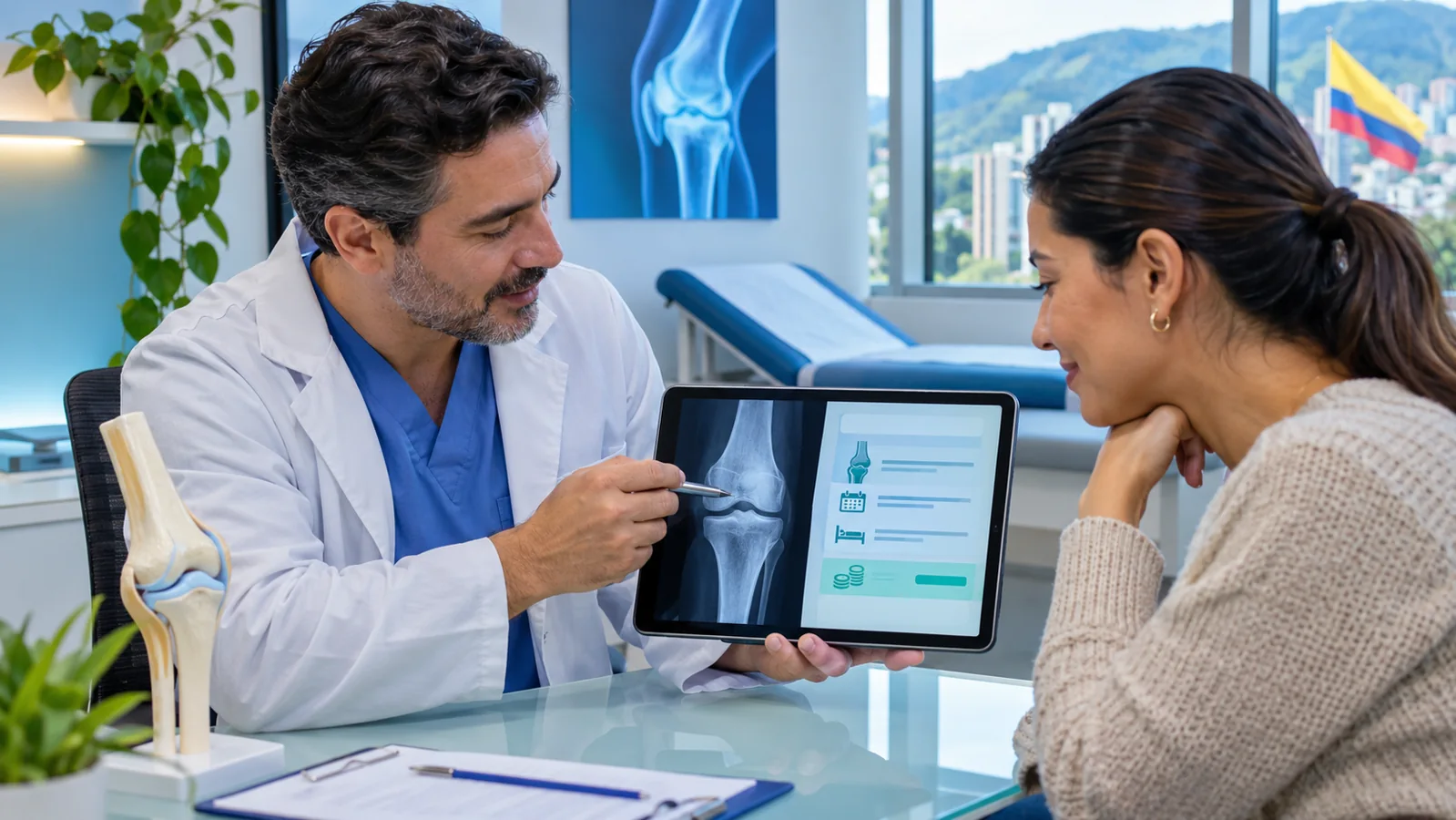
A price for a first knee replacement is difficult to compare without understanding the procedure. A price for revision knee replacement can be even harder to interpret. Revision surgery means a surgeon is evaluating an existing artificial knee that may need one component replaced, several components replaced, or a more complex reconstruction. The reasons can differ dramatically. A worn component, a loosened implant, instability, a fracture around the joint, and a possible infection are not interchangeable problems.
That is why a request that says only “I had a knee replacement and now it hurts—how much to redo it?” rarely supports a meaningful estimate. The next useful step is not to collect ten headline prices. It is to organize the records that let a qualified orthopedic specialist understand what failed, what remains uncertain, and which services a quote would need to cover.
This guide explains what to assemble, which questions distinguish comparable proposals, and how to avoid purchasing an international surgical package before its scope is defined. It is an administrative and decision-making guide, not a diagnosis or recommendation to undergo surgery.
Revision surgery is not one fixed procedure
A primary total knee replacement starts with a native joint. Revision surgery starts with a previous implant, its surrounding bone and soft tissues, and an operative history. Some revisions may be relatively limited. Others involve removal of components, managing bone loss, assessing ligament support, or staged care when infection is suspected. The surgeon’s assessment determines which scenario applies.
The American Academy of Orthopaedic Surgeons describes loosening and wear, infection, instability, stiffness, and fractures among reasons revision may be considered. The important word is considered: pain after joint replacement needs clinical evaluation, and not every painful implant requires another operation. Symptoms alone cannot reveal the appropriate treatment.
For a traveler, the practical consequence is simple. A facility advertising a standard “revision price” may be quoting an uncomplicated scenario, excluding investigations, specialist implants, or another stage of treatment. Treat the initial amount as provisional until a surgeon has examined the available evidence and stated what is included.
Start with the original operation, not just today’s symptoms
The original operative report is often one of the most valuable records. It may identify the manufacturer and model of the prosthesis, component sizes, fixation method, and any unexpected findings. Implant identification cards, invoices, and discharge summaries can help when an operative report is unavailable. Ask the hospital that performed the original replacement how you can request records securely.
Compile a short chronology: when the first surgery occurred; which knee was treated; how recovery progressed; when discomfort, swelling, instability, or reduced movement began; whether an injury occurred; and what assessments or treatments followed. Include later operations, injections, admissions, and physical therapy records when relevant. A dated timeline is more useful than a long unsorted message.
Do not guess about the implant type if you cannot confirm it. Label uncertain details as unverified. A revision specialist can then explain what additional documents or imaging may be needed, rather than building a quote on a mistaken assumption.
Imaging: provide what you have and ask what is missing
Specialists often need recent imaging, with particular views depending on the suspected problem. Existing X-rays, radiology reports, and any clinically indicated advanced imaging should be made available in the format the treating team requests. If possible, retain the original image files rather than sending only a phone photograph of a report.
A radiology report and an actual imaging study are different things. The report summarizes a reading; the images may help the reviewing surgeon understand alignment, component position, and changes over time. Ask whether a remote review can begin with current images or whether additional studies must be completed locally before an estimate has value.
Do not order tests solely because an online checklist mentions them. The treating clinician should decide which investigations make sense. If the clinic asks for fresh imaging, request the exact views and acceptable file format in writing so you do not repeat an expensive study unnecessarily.
Suspected infection changes the entire conversation
An infected artificial joint may require a substantially different evaluation and management plan from a mechanically loose one. A surgeon may need laboratory results, microbiology history, prior antibiotic records, and additional investigation. If the medical team has raised concern for infection, say so clearly rather than asking for a generic revision estimate.
Sometimes an infection-related treatment plan can involve more than one operation or a prolonged course of care. The exact approach depends on the individual clinical situation. A bundled package that covers “revision surgery” but not diagnostic testing, later stages, antibiotics, complications, or extended accommodation may leave the traveler with major unforeseen obligations.
Symptoms such as fever, worsening redness, drainage, or significant new pain need timely assessment by a medical professional; they should not be routed through a tourism quote form as a substitute for care. International coordination is appropriate only after urgent concerns are addressed and the clinician agrees travel can be considered.
What to include in a revision quote request
A good inquiry summarizes the case without transmitting more sensitive information than necessary through an unsecured channel. Send a short, non-sensitive overview first and ask the clinic for its secure upload process before sharing imaging or detailed records.
| Information | Why the specialist may need it |
|---|---|
| Date and location of original replacement | Establishes surgical history |
| Operative report and implant identifiers | Clarifies current components |
| Prior revision or other knee procedures | Reveals earlier changes |
| Main symptoms and onset timeline | Frames the problem under review |
| Relevant images and radiology reports | Supports preliminary assessment |
| Prior infection evaluations, if any | May change diagnostic and treatment planning |
| General health and medication history | Helps the treating team assess suitability |
| Local follow-up arrangements | Clarifies continuity after returning home |
Do not include a passport scan or sensitive medical documentation in a public form unless the service genuinely requires it, has an appropriate legal basis, and offers secure handling. The surgeon—not a marketing coordinator—should determine the medical significance of these records.
Demand a line-item estimate and a list of uncertainties
A written proposal should distinguish the surgeon’s fees, anesthesia, operating room, hospital stay, expected implant or component costs, imaging or laboratory work, and planned follow-up. Ask which complications or changes in surgical scope could affect the cost. Where implants may differ by case, request a clear explanation of how the final choice and any price adjustment will be communicated.
A quote should also state what it does not cover. Physical therapy, additional specialist visits, unexpected hospital days, medications, travel rebooking, and care after returning home can create significant expenses. If a proposed treatment may involve multiple stages, ask for the cost and timing assumptions for each stage rather than allowing the stages to disappear into the fine print.
Compare like with like. A quote for isolated component exchange is not equivalent to a quote for extensive reconstruction. A low-cost proposal may simply contain fewer services or more exclusions. Asking “What clinical assumptions produce this estimate?” is often more revealing than asking “Can you beat this price?”
Experience and readiness matter more than a brochure
Ask the prospective surgeon whether revision knee replacement is a regular part of their practice, how complex cases are reviewed, and which facility would provide the operation. Seek details about the hospital’s ability to manage unexpected complications and arrange appropriate specialist support. The surgeon’s professional registration, hospital authorization, and relevant services should be verified independently through official sources in the destination jurisdiction.
A beautiful clinic website does not demonstrate implant availability, sterile services, an appropriate inpatient team, or capacity to handle a difficult postoperative course. Nor does a referral directory’s inclusion amount to medical endorsement. Ask for the named clinical team and verify facts rather than inferring them from photographs or slogans.
For cross-border comparisons, request records of the proposed plan in a language you understand. A good consultation explains what remains unknown, which alternatives are available, and when an in-person assessment could change the plan.
Travel and rehabilitation cannot be bolted on afterward
Revision surgery may have recovery needs that differ from a primary replacement. The treating team should provide individualized guidance about safe mobility, physical therapy, follow-up appointments, potential complications, and when travel can be considered. A flight booking made before discussing postoperative risk can create pressure to leave prematurely.
Ask what support would be needed between discharge and a medically appropriate return date. Consider steps, bathroom access, transport seating, a companion, and how to obtain urgent help locally. Check whether a physical therapist or orthopedic clinician at home is willing to continue care and receive the operative report and discharge instructions.
Do not assume travel insurance covers planned surgery or complications from elective treatment. Ask the insurer specific written questions and understand exclusions. Budget for flexible travel, not just the surgeon’s estimate.
A comparison worksheet for two providers
For each proposal, record the surgeon and hospital, the clinical problem the quote assumes, intended procedure, required preoperative assessment, implant assumptions, number of anticipated stages, covered hospital days, follow-up plan, and exclusions. Leave unknown fields blank until the clinic answers. An honest “cannot estimate until further evaluation” can be more useful than an unjustifiably precise number.
Then ask three final questions: What might change this plan? Who makes that decision? How will I be informed of any added charges? These questions encourage transparent communication without pretending that all complications can be predicted.
Questions to send for a preliminary consultation
I previously had a knee replacement and would like a specialist opinion on persistent symptoms. I can provide my operative report, implant details, available X-rays, and a timeline of symptoms through your secure system. Can a revision knee specialist review my case virtually? Please explain which further tests may be needed, whether you can offer a preliminary treatment plan, and which cost items remain uncertain until an in-person evaluation.
This message is specific enough for a clinical coordinator to route appropriately while leaving diagnosis and treatment decisions to the specialist. Avoid sending detailed health records until the practice identifies its secure intake channel.
The decision before the price decision
Before comparing revision surgery abroad, establish whether revision is actually recommended, which diagnostic uncertainties remain, and who will support recovery. If the problem has not yet been characterized, the best “quote” is a professional assessment and a list of next steps—not an attractive package price.
Next step: KneeQuote can help organize an inquiry for qualified providers, but it should not promise eligibility, a particular operation, or a final price. Request a virtual clinical review first and compare written estimates only once the scope is reasonably clear.
Editorial sources
- AAOS OrthoInfo — Revision Total Knee Replacement
- American Academy of Orthopaedic Surgeons — Patient information
- CDC — Medical Tourism
General educational information only. The treating clinical team must determine suitability, risks and follow-up. No treatment outcome is guaranteed.